Few attacks in the crypto world are as quiet and as final as a wallet drainer. There is no locked vault to break into and no stolen password to reset. Instead, the victim presses a single button, the blockchain records an authorized transaction, and the funds are gone within seconds. Because the victim technically approved the transfer themselves, exchanges, wallets and law enforcement often have very little they can do afterwards. Understanding how drainers operate is therefore not paranoia — it is basic hygiene for anyone who stores digital assets in a self-custody wallet.
What a wallet drainer actually is
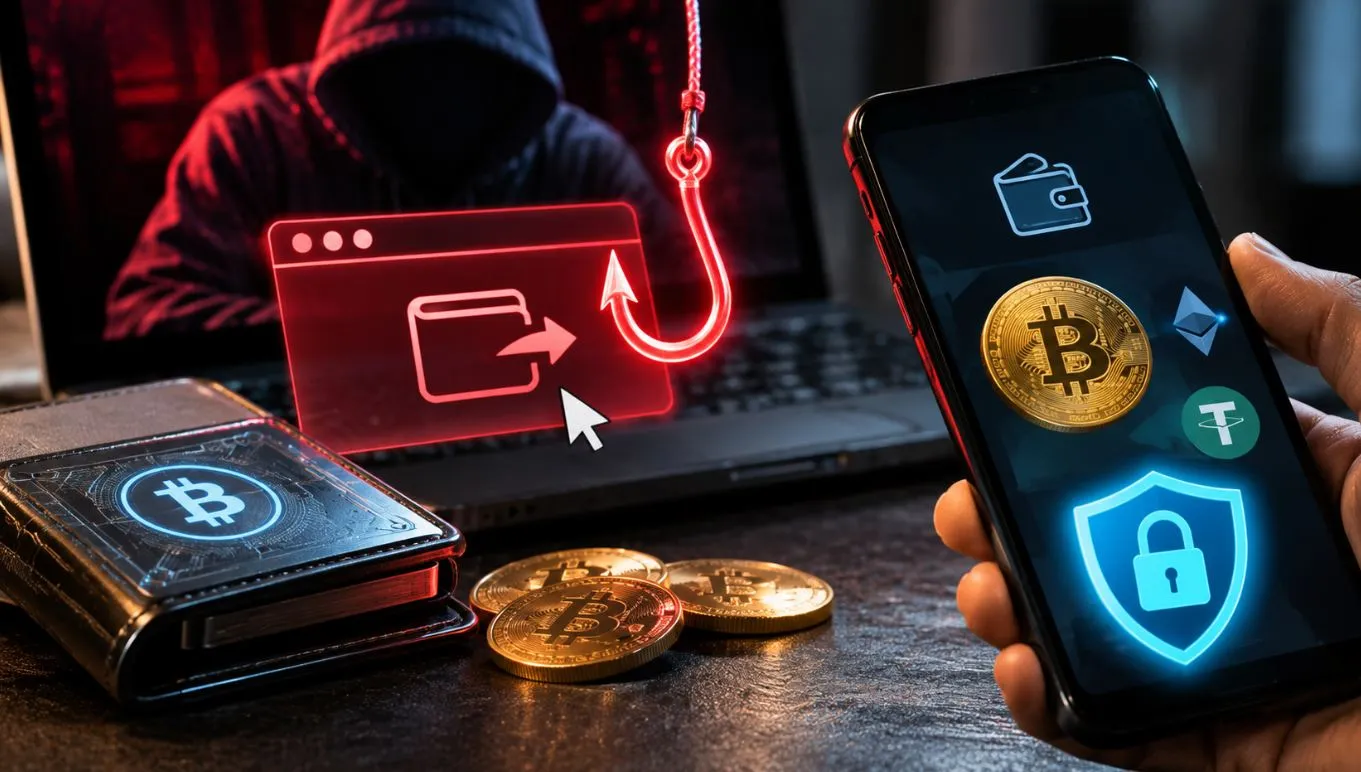
A wallet drainer is malicious software, sold or rented in underground communities, that is embedded in a website or application. Its only job is to trick the user’s wallet into signing transactions or approvals that hand over assets to the attacker. Unlike a classical hack, a drainer does not need the victim’s seed phrase and does not need to break any encryption. It exploits the most vulnerable component of any crypto setup: the moment when a human being decides whether a transaction request looks legitimate.
Drainers surged in popularity alongside the boom in NFTs, airdrops and decentralized applications. Every new token launch, every free mint and every viral giveaway creates a wave of users connecting their wallets to unfamiliar sites, and each of those connections is a potential entry point. The creators of drainers have industrialized this process: kits are marketed with dashboards, victim statistics and regular updates that keep pace with new wallet versions and security patches.
How a drainer attack unfolds, step by step
Every drainer campaign follows roughly the same script, whether it reaches the victim through a fake airdrop page, a spoofed support site or a compromised social media account.
- The bait is prepared. Attackers register lookalike domains, clone the design of a known project and push the fake page high into search results or paid ads. Others buy verified accounts on social platforms and post links from profiles that appear trustworthy.
- The victim connects a wallet. The site imitates the standard connection flow so faithfully that most users notice nothing unusual. A legitimate-looking prompt asks for permission to view the balance.
- The malicious request appears. At some point — often immediately, sometimes after a short delay — the site sends a transaction that is not what it pretends to be. It may be disguised as a claim, a mint, a listing or a security check.
- The victim signs. In a hurry and excited by the reward, the user approves the request. The approval may grant the drainer control over specific tokens or, in the worst case, use a signing standard that transfers assets without a second confirmation.
- The funds are swept. Scripts watch the blockchain for the victim’s address. Within seconds of the approval, the attacker’s contracts move the tokens out, often distributing them across dozens of freshly created wallets in the same block.
- The trail goes cold. Once the assets pass through mixers, cross-chain bridges and laundered wallets, recovery becomes extremely unlikely.
The speed of step five deserves emphasis. Victims often report that the balance disappeared before they had time to close the browser tab. This is why prevention, not reaction, is the only realistic strategy.
Where the bait usually hides
Drainers do not rely on a single delivery channel. They adapt to whatever is currently attracting attention, which makes pattern recognition the most useful defense.
- Fake airdrops and token claims that announce free rewards for loyal holders, usually with a deadline designed to create urgency.
- Spoofed official websites pushed through search ads above the real project’s link, complete with cloned layouts and logos.
- Compromised accounts of influencers, projects or media outlets, which lend borrowed credibility to a malicious link.
- Comments and replies under popular posts, where scammers pose as support staff or community managers offering to fix a problem.
- Counterfeit versions of popular apps distributed through unofficial stores or links in direct messages.
- QR codes in phishing emails or physical mail, which a mobile wallet will happily scan and act on.
- Deepfake videos and fake interviews of well-known figures urging viewers to connect a wallet to a promotional site.
Each of these vectors shares the same core: the promise of something free or the fear of losing something. That emotional pairing — greed plus urgency — is the signature of virtually every drainer lure.
How drainer scams differ from other crypto fraud
The term “scam” is often used loosely, which is why victims sometimes misidentify what actually happened to them. Drainers occupy a specific niche: they never ask for the seed phrase, and they never need direct access to the wallet’s private keys. The comparison below shows how the main fraud types relate to each other.
| Scam type | What the victim is asked to do | What the attacker obtains | Typical entry point |
|---|---|---|---|
| Wallet drainer | Approve or sign a malicious transaction on a fake site | Controlled access to tokens through the blockchain itself | Fake airdrops, cloned sites, ads |
| Seed phrase phishing | Type the recovery phrase into a form or bot | Full, permanent control of the wallet | Fake support chats, fake wallet apps |
| Fake support agent | Share credentials or send crypto to a “verification” address | The deposited funds directly | Comments, calls after a real problem |
| Investment or romance fraud | Deposit money into a “profitable” platform over time | All deposits before the exit | Social media, dating apps |
| Clipboard malware | Make an ordinary transfer | Redirected funds via a swapped address | Infected downloads, pirated software |
Reading the table closely reveals an important asymmetry. In every scheme except the drainer, the damage comes from information the victim surrendered or money the victim sent. In a drainer attack, the damage comes from permission the victim granted. That difference shapes both the defense and the recovery options, because approvals can be managed — but only before or after the fact, never in the decisive moment.
The technical trick behind the curtain
Most drainer kits abuse legitimate features of blockchain standards. An approval transaction does not move funds; it simply tells a token contract that another address may spend the owner’s tokens. A drainer asks for an unlimited approval of a valuable token, waits for the signature and then drains the balance at leisure. More advanced kits abuse signature standards such as permit and permit2, which allow token transfers to be authorized with a signature that looks like an innocent confirmation rather than an obvious transaction. In these cases the wallet interface may not even warn the user that something significant is happening.
Another favorite technique is signature spoofing, where the malicious site displays one request in its own interface while the wallet window shows the true contents. Users who read the website prompt but not the wallet prompt effectively sign blind. Hardware wallets mitigate this only partially: they show the real data on their screen, but they cannot judge intentions for the person holding them.
Warning signs that a page is a drainer
Because drainers imitate trustworthy interfaces so well, the telltale clues tend to be subtle. Training your eye to catch them is the single most profitable habit a crypto user can develop.
- A wallet connection is requested before it is needed, especially on a page advertising a reward.
- A transaction appears without a clear, specific reason tied to the action you initiated.
- The request asks for approval of a very large or unlimited amount of a token.
- The receiving or spender address is unfamiliar, ends in a strange suffix or does not match the project’s published address.
- The site arrived through an advertisement, a direct message or a comment rather than a bookmarked official link.
- Urgency is manufactured everywhere: countdown timers, limited quotas and warnings that the offer expires in minutes.
- The wallet prompts you to sign something labeled generically as “permit,” “sign message” or “execute” without a human-readable description.
- The domain is one character off, uses an unusual ending or was reached through a search ad instead of the project’s known URL.
None of these signs alone proves malicious intent, but each one is a reason to stop and verify. The cost of slowing down is a few minutes of inconvenience; the cost of ignoring the signs is the entire wallet.
Practical defense for everyday users
Protection against drainers rests on a handful of habits that together remove almost every attack path. The first is compartmentalization: keeping a “hot” wallet for interactions with new and unverified sites, while long-term savings live in a separate wallet or hardware device that never touches unfamiliar pages. If a drainer strikes, it can only reach what was exposed, not what was stored elsewhere.
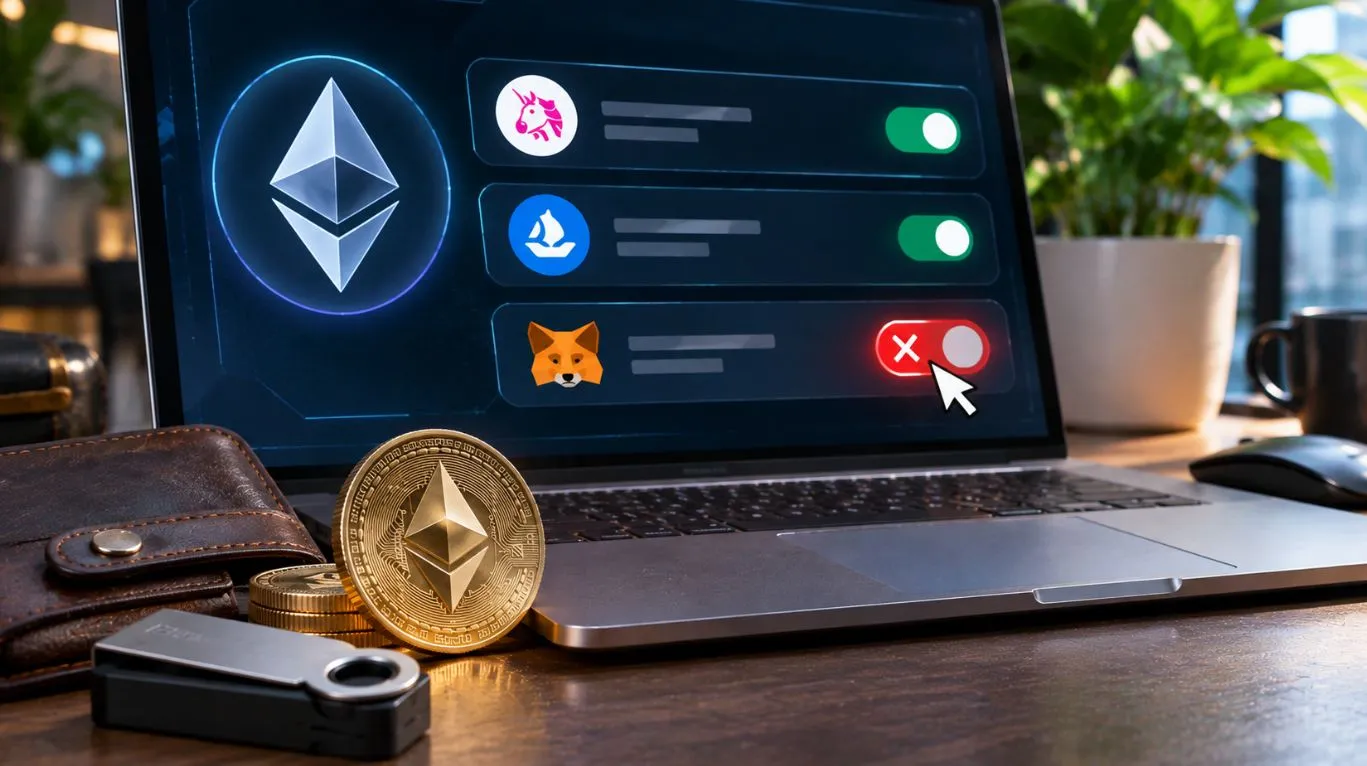
The second habit is review discipline. Before signing anything, users should read the full details in the wallet window, check the spending cap being requested and verify the spender address. Periodic reviews of active token approvals — using approval-checking services or the wallet’s built-in management tools — let you revoke permissions that are no longer needed. Approval cleanup is also the standard response after a suspicious interaction: revoking an outstanding approval can prevent a planned drain that has not yet executed.
Third, treat signatures as seriously as transactions. A signature is not a harmless confirmation; depending on the standard, it can be a binding authorization. If a website demands a signature you cannot explain in one sentence, the correct response is refusal.
Finally, maintain healthy skepticism toward anything that arrives uninvited with money attached. Legitimate airdrops, mints and rewards exist, but they never require urgency, never require paying a fee to “unlock” a prize and never disappear if you wait an hour. Waiting is one of the cheapest and most effective security tools available, because drainer campaigns often burn through their infrastructure in days.
What to do if a wallet has already been drained
Once the transaction is confirmed, the assets are effectively gone, but the following hours still matter. Moving any remaining tokens and NFTs from the compromised wallet to a fresh address is the immediate priority, since attackers frequently return to sweep leftovers. Any live approvals granted to unknown contracts should be revoked across all chains the wallet has touched. The incident is worth reporting to the platform where the phishing page was hosted and to relevant law enforcement channels, even though the realistic chances of recovery are small. Above all, the seed phrase of the affected wallet must be treated as burned; if it was ever typed into a website, the wallet should be retired permanently.
A mindset that outlasts every new trick
Drainer kits will keep evolving: new signing standards, new social media platforms, new bait tied to whatever trend dominates the week. The core of the attack, however, has not changed since the first phishing email. Someone wants a signature from you, and everything else is packaging. A user who verifies addresses, limits approvals, separates funds by risk and refuses unexplained requests is protected not against one scam but against the entire family of them. In crypto, the strongest security feature is not any tool or wallet — it is the pause between seeing a request and signing it.