AI-powered automated crypto trading: how it works
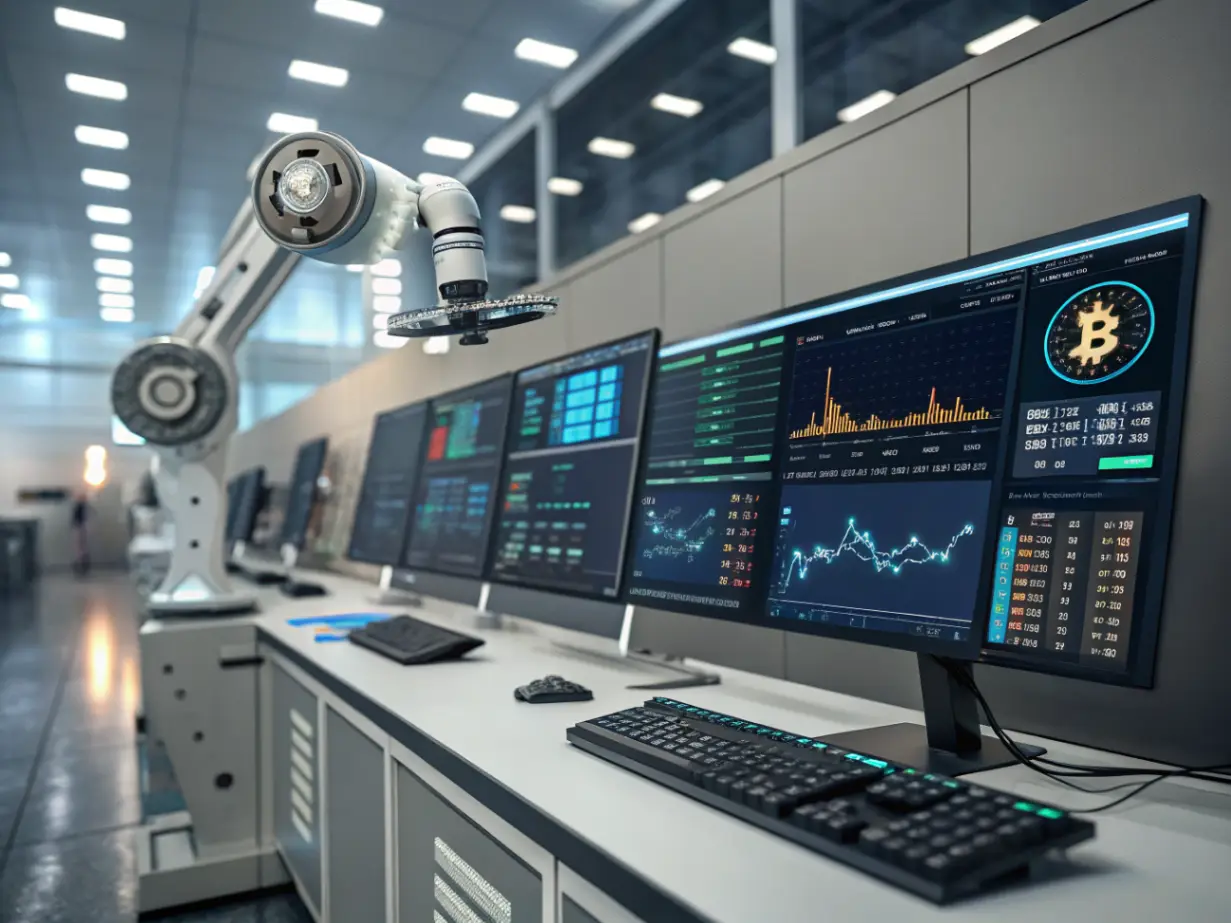
Cryptocurrency markets never sleep. Prices move through weekends, holidays, quiet nights, sudden news cycles, exchange outages, liquidity shocks and waves of human emotion. For a trader, that creates both opportunity and pressure. No person can watch every chart, compare every market, read every signal and react instantly around the clock without fatigue. This is where AI-powered automated crypto trading becomes interesting: it brings software, data analysis and execution rules into a market that changes faster than most humans can process.
AI does not turn trading into guaranteed profit. It does not remove risk, and it does not magically predict the future. What it can do is process large amounts of information, detect patterns, react consistently and follow a strategy without panic or greed. The real value of AI in crypto trading is not fantasy-level intelligence, but discipline, speed and the ability to work with more data than a human trader could handle manually.
How automated crypto trading works
Automated crypto trading is based on a simple idea: instead of placing every order manually, a trader connects a trading system to an exchange and lets the system open, manage or close trades according to predefined logic. That logic can be very simple, such as buying when one moving average crosses another. It can also be more complex, using machine learning models, market sentiment, volatility filters, order book data and risk controls.
A typical automated trading setup includes a trading strategy, market data, an execution engine and access to an exchange account through an API. The API is the bridge between the exchange and the trading software. It allows the system to receive price data, check balances and place orders. A serious setup should use restricted API permissions, meaning the bot may be allowed to trade but not withdraw funds.
AI enters the process when the system is designed to analyze data and adapt its decisions based on patterns. A traditional bot follows fixed rules. An AI-based system may estimate the probability of price movement, classify market conditions, detect unusual behavior or adjust position sizing when volatility changes. This does not mean the system is conscious or creative. It means it uses statistical methods and models to make trading decisions more flexible.
For example, a basic bot may buy Bitcoin when the price breaks above a resistance level. An AI-powered system may check whether that breakout is supported by volume, liquidity, broader market momentum, funding rates, social sentiment and recent volatility. If the signal looks weak, the system may ignore the trade. If conditions look strong, it may open a position with a controlled risk level.
The important point is that automation handles execution, while AI improves analysis. The trader still needs to define goals, choose markets, set risk limits, test the strategy and monitor performance. A bot without human oversight can be dangerous, especially in crypto, where sudden market moves can break weak strategies in minutes.
What AI actually does in crypto trading
AI in crypto trading is often described in exaggerated terms, but its practical role is more grounded. It helps trading systems understand market behavior through data. Instead of relying only on one chart or one indicator, AI can combine multiple signals and look for relationships that are difficult to see manually.
Machine learning models can be trained on historical price data, volume, volatility, liquidity and market structure. Some systems also use news headlines, social media activity, blockchain data, exchange flows and derivatives metrics. The goal is not to know the future with certainty, but to estimate which scenarios are more likely under current conditions.
AI can be useful in several areas of the trading process:
• Signal generation, where the model identifies potential entry and exit points.
• Market classification, where the system decides whether the market is trending, ranging, volatile or unstable.
• Risk adjustment, where position size changes depending on volatility and confidence.
• Sentiment analysis, where the system reads public market mood from news or social platforms.
• Anomaly detection, where unusual price or volume behavior is flagged before execution.
• Portfolio balancing, where the system distributes exposure across several crypto assets.
These functions are valuable because crypto markets are noisy. A price move can look like a strong signal but turn out to be a fake breakout. A coin may rise quickly because of genuine demand, temporary hype or low liquidity. AI can help filter weak signals, but it cannot remove uncertainty. The market can always behave in a way that was rare or absent in historical data.
One common mistake is assuming that a more complex AI model is always better. In trading, complexity can become a weakness. A model may perform beautifully on historical data but fail in live markets because it learned the past too precisely. This problem is called overfitting. A well-built trading system should be simple enough to explain, tested across different market conditions and protected by strict risk rules.
Good AI trading is not about chasing every move. It is about making better decisions under uncertainty. The model should help the strategy avoid low-quality trades, control losses and act consistently when human emotions would normally interfere.
Main types of AI trading strategies
AI-powered crypto trading can support different strategies, depending on the trader’s goals, risk tolerance and time horizon. Some systems trade many times per day. Others open fewer positions and hold them for days or weeks. The right strategy depends on market conditions, available capital, fees, liquidity and the quality of data.
Trend-following strategies try to capture directional moves. If Bitcoin, Ethereum or another asset enters a strong upward trend, the system looks for confirmation and joins the move. AI can help by distinguishing between a real trend and short-term noise. It may analyze momentum, volume, volatility and broader market strength before entering a trade.
Mean-reversion strategies are based on the idea that prices often move too far in one direction and then return closer to an average. These systems may buy after sharp drops or sell after extreme rallies, but only when the model believes the move is overstretched. In crypto, mean reversion can be profitable in sideways markets, but it can also be risky during strong trends, where prices keep moving against the position.
Arbitrage strategies look for price differences across exchanges or related markets. A coin may trade slightly higher on one exchange than another. In theory, a bot can buy cheaper and sell higher. In practice, fees, withdrawal delays, liquidity, slippage and execution speed make arbitrage harder than it looks. AI can help identify realistic opportunities, but infrastructure matters more than theory.
Market-making strategies place buy and sell orders around the current market price. The system earns from the spread when trades are filled. This approach requires strong control over inventory, fees and sudden price movement. AI can assist by adjusting spreads when volatility rises or liquidity becomes thin.
Sentiment-based strategies use news, social media or public discussion to detect shifts in market mood. Crypto is highly sensitive to narratives. A token can move sharply because of regulation news, exchange listings, protocol updates, security incidents or influential public comments. AI language models can process large volumes of text and classify whether the tone is positive, negative or uncertain.
The following table shows how several common AI trading approaches differ in purpose, strengths and risks. It is useful to compare them because many beginners treat all bots as if they work the same way, while each strategy behaves differently in live markets.
| Strategy type | How it works | Best market conditions | Main risk |
|---|---|---|---|
| Trend following | Enters trades in the direction of strong price movement | Clear upward or downward trends | Late entries and false breakouts |
| Mean reversion | Trades against extreme short-term moves | Sideways or range-bound markets | Large losses during powerful trends |
| Arbitrage | Exploits price differences between markets | Fragmented liquidity and exchange gaps | Fees, delays and execution failure |
| Market making | Places buy and sell orders around current price | Stable markets with active volume | Sudden volatility and inventory imbalance |
| Sentiment trading | Uses news and social data to detect market mood | Narrative-driven market phases | Misreading hype or reacting too late |
| Portfolio automation | Rebalances assets based on risk and allocation rules | Long-term diversified exposure | Poor asset selection and correlation spikes |
No single strategy works all the time. A trend model may perform well during a bull market and struggle during months of sideways movement. A mean-reversion system may look stable until a major breakout destroys its assumptions. This is why many advanced systems combine several models or include a market regime filter. The system first tries to understand the environment, then decides which strategy is appropriate or whether trading should pause.
Data, signals and decision-making
AI trading depends on data quality. A model is only as useful as the information it receives. Bad data can create false confidence, and false confidence is dangerous in automated trading. Crypto data can be messy because different exchanges may show different prices, liquidity can change quickly, and smaller assets can be heavily affected by manipulation or thin order books.
The most basic data includes open, high, low, close and volume. This is enough for many technical strategies, but AI systems often go further. They may analyze order book depth, trade flow, funding rates, open interest, liquidation levels, wallet activity and stablecoin flows. Some systems also include macro indicators, such as interest rate expectations or risk appetite in global markets, because crypto often reacts to broader financial conditions.
Signals are the pieces of information that influence a trading decision. A signal can be technical, such as a volatility breakout. It can be behavioral, such as rising social interest. It can be structural, such as a sudden decrease in liquidity. The AI model weighs these signals and produces an output. That output may be a direction, a confidence score, a risk level or a direct order instruction.
A simplified decision process might look like this: the model detects that Ethereum is showing strong momentum, volume is rising, Bitcoin is stable, funding rates are not overheated and volatility is within acceptable limits. The system then opens a long position with a predefined stop-loss and take-profit plan. If volatility suddenly increases or the signal weakens, the system may reduce the position or close it.
The risk control layer is just as important as the prediction layer. A trading model can be right more often than wrong and still lose money if losses are too large. Strong systems define maximum position size, maximum daily loss, stop-loss logic, exposure limits and rules for abnormal conditions. If an exchange becomes unstable, spreads widen sharply or data becomes unreliable, the bot should stop trading rather than continue blindly.
AI decision-making should also be monitored after deployment. Markets change. A strategy that worked during one market cycle may become weak in another. The system needs performance tracking, error logs and regular reviews. Useful metrics include win rate, average profit, average loss, drawdown, slippage, fee impact and performance by market condition.
Human traders often focus on entry signals, but professionals care deeply about exits, risk and execution. AI can help with all three, but only when the system is built with realistic assumptions. A model that ignores trading fees, liquidity and slippage may look profitable in testing while losing money in real trading.
Benefits and limitations of AI trading bots
The strongest benefit of AI-powered crypto trading is consistency. Human traders get tired, impatient and emotional. They chase losses, close winning positions too early or ignore risk limits after a few successful trades. A bot does not feel excitement after a green candle or fear after a red one. It simply follows the system.
Speed is another advantage. Crypto markets can move in seconds. Automated systems can react faster than manual traders, especially when they monitor several markets at once. This matters during sharp breakouts, liquidation cascades or sudden liquidity changes.
AI also helps with scale. A person may comfortably follow a few assets. A system can monitor dozens or hundreds of pairs, compare signals and rank opportunities. It can trade only when conditions match the strategy and ignore weak setups without hesitation.
Yet the limitations are serious. AI models learn from past data, while markets are shaped by future events. Regulation, exchange failures, hacks, macro shocks, liquidity crises and unexpected news can change behavior instantly. No historical model can fully prepare for every surprise.
Another limitation is dependence on infrastructure. Even a good strategy can fail because of exchange downtime, API errors, delayed data, poor internet connection or order execution problems. Crypto markets are especially vulnerable to slippage during volatility. A stop-loss may execute far below the expected price if liquidity disappears.
Security is also critical. A trading bot usually connects to an exchange account through API keys. If those keys are stolen or poorly configured, funds may be at risk. Withdrawal permissions should normally be disabled. API keys should be stored securely, and the trader should avoid unknown bot platforms that request excessive access.
There is also the psychological risk of trusting automation too much. Some users treat bots as passive income machines. That mindset is dangerous. Automated trading still requires supervision, testing and realistic expectations. A profitable backtest does not guarantee live results. A profitable month does not prove that the strategy is safe. A bot can lose money quickly if market conditions shift.
The best use of AI is not to replace judgment completely, but to support a disciplined trading process. The trader defines the boundaries. The system works inside them. When the boundaries are weak, automation only makes mistakes faster.
How to build or choose a reliable system
A reliable AI trading setup starts with a clear strategy. Many beginners begin with the tool, not the logic. They search for a bot, connect it to an exchange and hope the settings will produce profit. A better approach is to define what the system is supposed to do. Is it trading trends, managing a portfolio, reducing emotional decisions or scanning for short-term opportunities? Without a clear purpose, performance cannot be judged properly.
Backtesting is the next step. This means testing the strategy on historical data to see how it would have performed. Backtesting should include fees, slippage and realistic order execution. It should also cover different market conditions: bull markets, bear markets, sideways periods and high-volatility crashes. A strategy that only works during one favorable period is fragile.
After backtesting, paper trading or demo trading is useful. This allows the system to run in real time without risking actual funds. Paper trading reveals problems that backtests may hide, such as delayed signals, unstable execution, API issues or unrealistic assumptions about liquidity.
When real money is used, the starting size should be small. A system needs time to prove itself in live conditions. The trader should monitor whether real performance matches expectations. If losses are larger than expected, trades execute poorly or the model behaves strangely, the system should be paused and reviewed.
Choosing a third-party AI trading bot requires caution. A trustworthy platform should be transparent about strategy logic, risk controls, exchange permissions, fees and security practices. It should not promise guaranteed income. It should not pressure users with unrealistic profit screenshots. It should offer clear documentation and allow users to control risk settings.
Good risk management includes capital allocation rules. A trader should avoid putting all funds into one bot, one exchange or one strategy. Crypto already carries high market risk, so concentration increases the chance of serious loss. Diversification does not remove risk, but it can reduce dependence on a single point of failure.
A practical checklist for evaluating an AI trading system includes performance, safety and control. The system should be understandable enough that the trader knows when it is likely to perform well and when it may struggle. Total trust in a black box is rarely wise in financial markets.
The future of AI in crypto markets
AI will likely become more common in crypto trading because the market produces enormous amounts of data. Prices, order books, blockchain transactions, derivatives activity, social narratives and exchange flows all create signals. As tools become easier to use, more traders will rely on automation for analysis, execution and risk management.
The future may bring smarter systems that adapt more effectively to changing conditions. Instead of using one fixed model, trading platforms may combine several specialized models: one for sentiment, one for liquidity, one for volatility, one for portfolio risk and one for execution. These systems may not only decide whether to trade, but also how aggressively to trade and when to stay out of the market.
On-chain data will also play a larger role. Unlike traditional finance, many crypto transactions are publicly visible. AI can analyze wallet behavior, exchange inflows, token distribution, liquidity movements and protocol activity. This can help traders understand whether price action is supported by real activity or mostly driven by speculation.
At the same time, competition will increase. If many traders use similar AI tools, simple advantages may disappear. Markets adapt. Strategies that become popular often become less effective. This means the edge will not come only from using AI, but from using better data, stronger risk control, cleaner execution and more thoughtful strategy design.
Regulation may also influence automated crypto trading. As governments and financial authorities pay more attention to digital assets, exchanges and trading platforms may face stricter rules. This could improve transparency and security, but it may also change how bots operate across regions.
The most realistic future is not one where AI replaces all traders. It is one where serious traders use AI as part of their workflow. The system scans markets, filters noise and executes with discipline. The human sets objectives, understands risk and decides when the strategy no longer fits the environment.
Conclusion
AI-powered automated crypto trading works by combining data analysis, trading logic and fast execution. It can monitor markets continuously, process many signals, manage positions and remove some emotional mistakes from trading. Its strength is not magic prediction, but structured decision-making in a market that moves quickly and often irrationally.
The best systems are built around clear strategies, tested carefully and protected by strict risk controls. They account for fees, slippage, volatility, liquidity and changing market conditions. They are monitored rather than blindly trusted. AI can improve trading decisions, but it cannot make crypto risk-free.